
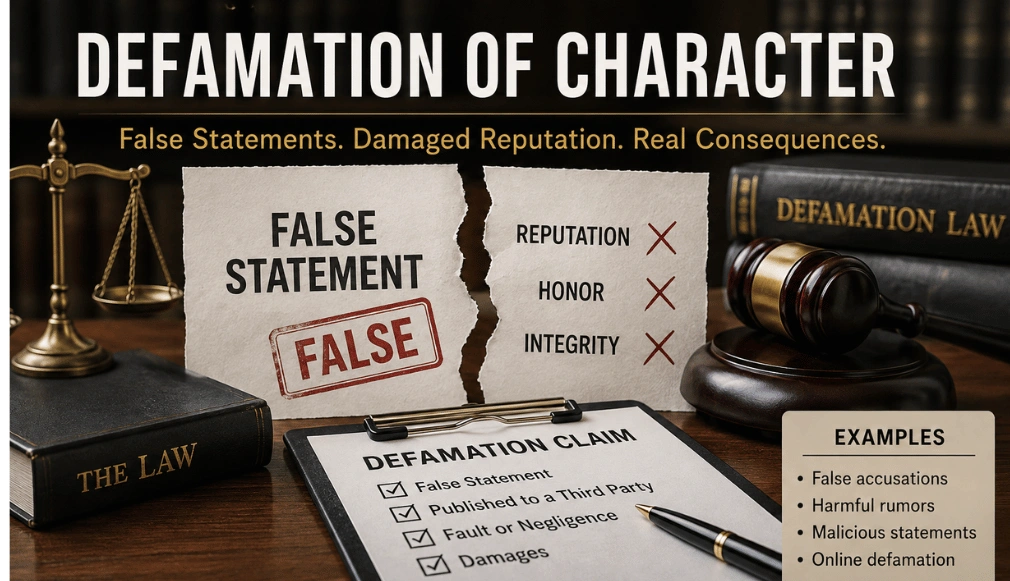
If you searched for a defamation of character site because a webpage, review, forum post, or social media post is harming your reputation, the key issue is not simply whether the content feels unfair. U.S. law generally looks for a false statement of fact, publication to another person, the required level of fault, and legally recognized harm. State laws can affect the details, including filing deadlines and available damages.
| Key question | General U.S. framework |
| What is defamation? | A statement that harms another person’s reputation |
| Libel or slander? | Libel usually involves written or fixed communications, while slander generally involves spoken statements. |
| Must the statement be false? | Yes. Falsity is a central part of a defamation claim. |
| Does someone else need to see it? | Yes. Publication or communication to a third party is generally required. |
| Does being a public figure matter? | Yes. Public officials and public figures face a higher constitutional fault standard. |
| Can the website itself be liable? | Federal Section 230 protections may shield online services from publisher liability for qualifying third-party content. |
| Are deadlines the same everywhere? | No. Defamation rules and procedural requirements vary by state. |
These principles come from state defamation law, First Amendment decisions, and federal law governing third-party internet content.
Short answer: An online publication may support a defamation claim when it makes a false, provable statement of fact about an identifiable person, communicates that statement to someone else, meets the required fault standard, and causes legally recognized harm. The exact rules, defenses, deadlines, and damages depend on the state and on whether the claimant is a public or private figure.
TL;DR: What Matters Most
- A harsh comment is not automatically defamatory.
- False factual claims create more legal risk than insults or obvious exaggeration.
- Online posts usually fall within the written-defamation category.
- The original author and the platform hosting the content may face different legal rules.
- Public officials and public figures generally must meet the “actual malice” standard.
- Preserve the post and its context before requesting removal.
How a Defamation of Character Site Can Create Legal Liability
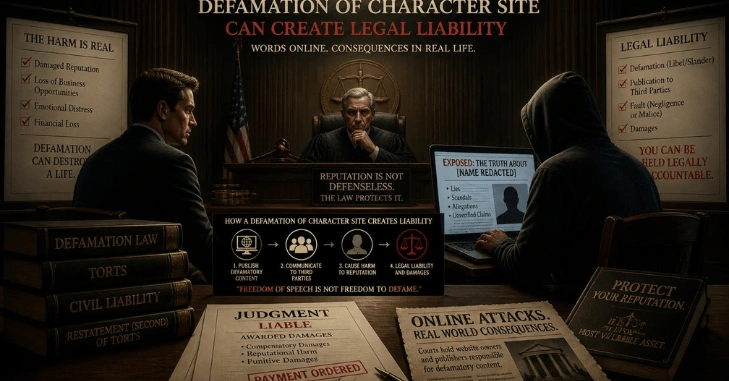
A successful claim normally requires more than proof that a statement caused embarrassment. Defamation claims generally involve four core elements: a false statement of fact, publication to a third party, sufficient fault, and resulting reputational harm. State law can modify the precise requirements.
A practical screening test asks five questions:
- Does the statement assert a fact? A claim that someone committed fraud can be tested against evidence. A vague insult may not amount to a factual assertion.
- Is the statement false? Defamation law does not exist to punish accurate criticism.
- Does it identify a person or business? Readers must be able to connect the statement to the claimant.
- Was it communicated to someone else? A public webpage, review, or post will often satisfy the publication requirement.
- Can the claimant show the required fault and harm? The answer depends partly on state law and on the claimant’s status.
Failing to satisfy even one of these elements can significantly weaken a claim.
Libel, Slander, and Online Posts
Defamation includes both libel and slander. Libel generally refers to defamation communicated through writing or another fixed form, while slander usually concerns spoken statements.
That distinction means written website content, articles, reviews, comments, and many social media posts may fall within the category of libel. The label alone does not determine liability. The wording, context, truth or falsity, audience, level of fault, and applicable state law still matter.
A negative review can therefore be lawful even when it harms a business’s reputation. A false factual accusation presents a different legal issue from a statement such as “I disliked the service” or another clearly subjective assessment.
Who Can Be Liable: The Author, Publisher, or Hosting Platform?
Online cases often become confusing because several parties may appear on the same screen. The person who wrote a statement may be the primary speaker. A company that created and published its own article presents a different situation. A platform that merely hosts material supplied by a user may raise a separate federal issue.
Section 230 of Title 47 generally prevents an interactive computer service from being treated as the publisher or speaker of information supplied by another information content provider. That rule can have major consequences for claims based on user-generated content. Defamation of character: This means you should not assume that suing the website is the same as pursuing the person who wrote the content—the source of the material matters.
If a dispute appears likely to proceed to court, Justibyst’s guide to the civil litigation and appeals process explains how case evaluation, pleadings, discovery, and evidence fit into broader litigation.
Truth, Opinion, and Privilege Can Change the Case
The distinction between fact and opinion deserves careful attention. Simply adding the phrase “in my opinion” does not automatically protect a speaker. Courts may examine whether a statement implies a provably false factual assertion, even when it is presented as an opinion. A statement’s wording and context therefore matter.
Obvious exaggeration, rhetorical language, and statements that cannot reasonably be understood as assertions of fact may receive stronger First Amendment protection.
Privilege can also affect liability. Certain communications receive absolute or qualified protection because of the setting in which they are made. The scope of those protections depends on the governing law and the circumstances.
Public Figures Face a Higher Fault Standard
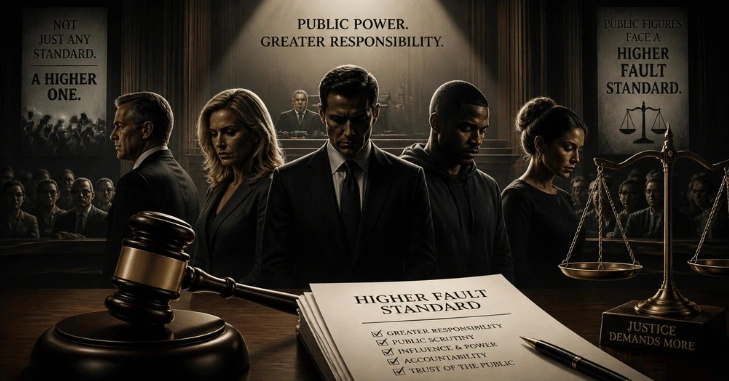
The identity and public status of the person discussed can change what a plaintiff must prove. Public officials and public figures generally face the “actual malice” standard in qualifying defamation cases. That standard requires proof that the defendant knew the statement was false or acted with reckless disregard for whether it was true or false.
Private individuals are treated differently. States may apply different fault standards to private plaintiffs, subject to constitutional limits. As a result, a celebrity, government official, local business owner, and private employee may not face identical legal standards.
What Evidence Should You Preserve?
If a statement may disappear, document it before contacting the author or platform.
Save:
- the full page or post, not just the disputed sentence;
- screenshots showing the surrounding context;
- the page URL and the date you accessed it;
- usernames, profile details, and visible publication dates;
- emails or messages connected to the publication; and
- records showing lost customers, employment opportunities, contracts, or other measurable harm.
Keeping the surrounding context is especially useful because evidence rules can affect how messages and out-of-court statements are handled later. Justibyst’s guide to hearsay evidence and its exceptions explains that evidentiary issue in more detail.
Preserving evidence does not guarantee that every screenshot or message will be admissible. It does, however, give your attorney more information to evaluate.
What to Do Before Demanding Removal or Filing a Lawsuit
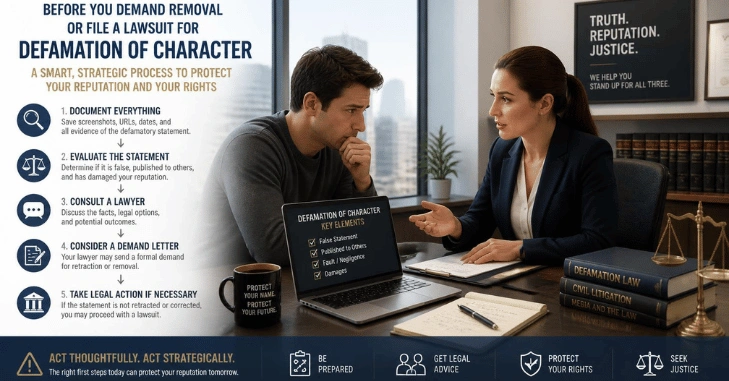
Start by identifying the exact statements you believe are false. Write down the evidence that supports your position for each disputed statement. Next, identify who created the material. Distinguish the original author from the website, host, social network, search engine, or other intermediary.
Then determine which state’s law may govern the dispute. Defamation standards, filing deadlines, available damages, and procedural rules can vary by jurisdiction. Avoid assuming that a takedown demand is always the best first step. A public dispute can sometimes spread the allegation more widely. A lawyer can assess whether a correction request, platform report, demand letter, negotiation, or lawsuit makes sense.
If the online dispute also involves unauthorized copying of photographs, articles, or other creative material, that may raise a separate legal issue.
Protect the Evidence Before You Decide What Comes Next
A damaging online statement does not automatically create a successful lawsuit. Focus first on whether the statement asserts a false fact, who published it, who saw it, and what harm resulted. Defamation of character. Preserve the page before seeking its removal. Then have a lawyer licensed in the relevant state review the wording, possible defenses, applicable filing deadline, and identity of the proper defendant. This article provides general U.S. legal information. It is not legal advice for a specific dispute.
Frequently Asked Questions
Not simply because it criticizes someone or contains negative opinions, liability generally depends on whether specific statements satisfy the legal requirements for defamation. Those requirements may include falsity, factual meaning, publication, fault, and legally recognized harm.
Possibly, but the platform and the original poster do not automatically face the same liability. Federal law may protect qualifying online services from being treated as the publisher or speaker of third-party information. The specific facts and the platform’s role still require legal analysis.
Not merely because it is negative, a subjective statement about a customer’s experience differs from a false, verifiable factual accusation. Courts may also consider the wording and surrounding context.
No. Public officials and public figures generally face the constitutional “actual malice” standard in covered claims. Private plaintiffs may be subject to different standards under state law.