
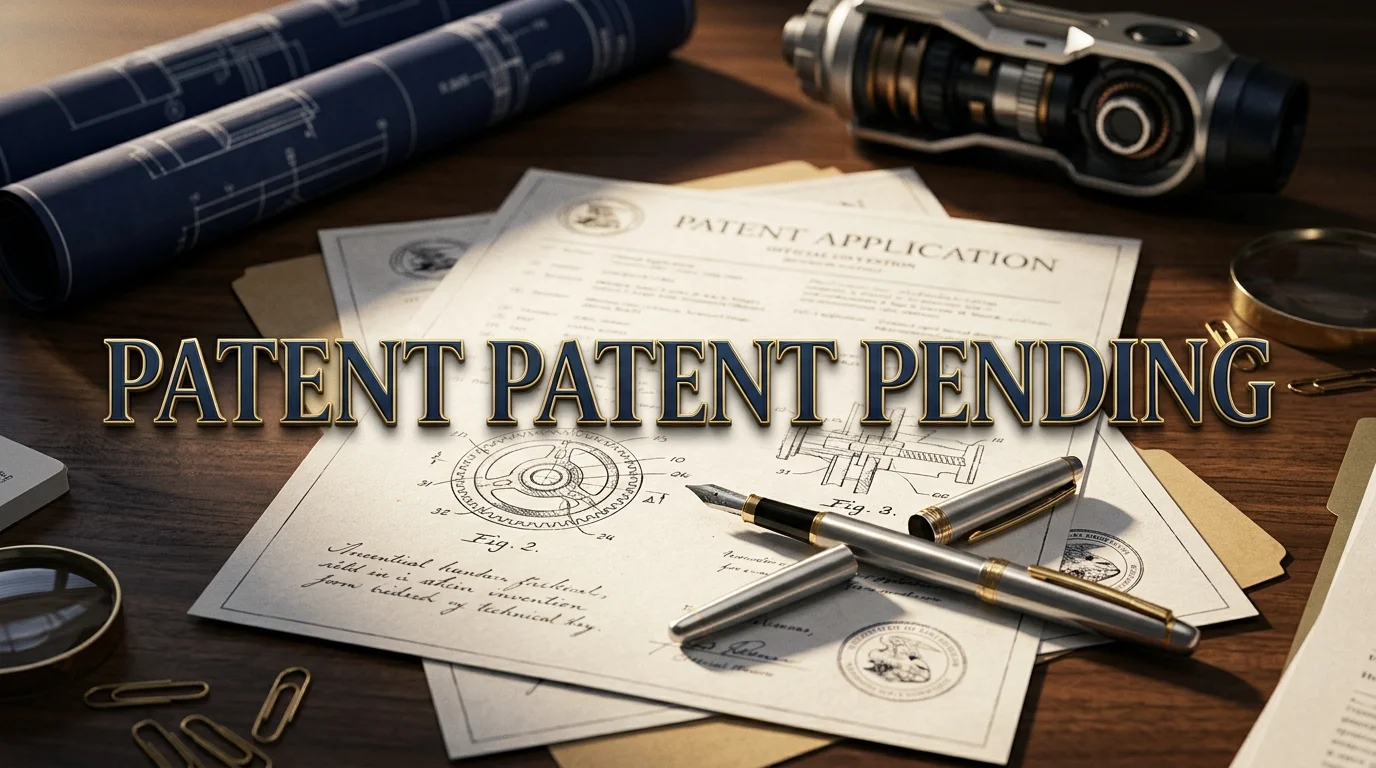
A search for patent patent pending usually comes down to one question: do these terms provide the same protection? They do not. A granted patent creates enforceable rights, while a pending application generally does not.
| Key point | Granted patent | Patent pending |
|---|---|---|
| Status | USPTO has issued the patent | A patent application remains pending |
| Enforcement | Patent owner may enforce issued claims | Application alone generally cannot support an infringement claim |
| Public notice | Products may identify the issued patent | Applicant may use a pending-status notice |
| Outcome | Rights have been granted | A patent may or may not issue |
| Duration | Depends on patent type and applicable law | Continues while the relevant application remains pending |
| Main risk | Infringement can create liability | False marking can create legal problems |
Direct answer: Patent pending means a patent application has been filed, but the USPTO has not granted the patent. The words do not create enforceable patent rights by themselves. A granted patent can provide exclusionary rights defined by its issued claims.
Patent Patent Pending: Is It a Patent or Only an Application?
A granted U.S. patent represents an issued legal right. Federal law gives a patent owner specific exclusionary rights during the patent term. Those rights can cover making, using, selling, offering to sell, or importing the claimed invention.
A pending application sits at an earlier stage. The USPTO has received an application, but it has not yet issued an enforceable patent from that application. The final scope may also change during examination.
That distinction matters for inventors, startups, manufacturers, and potential competitors. A pending application signals that patent protection is being pursued. It does not guarantee that the USPTO will grant any requested claim.
What Does a Pending Patent Application Mean in the United States?
The USPTO describes the designation as notice that someone has applied for patent protection. The application may eventually produce an issued patent. It may instead be rejected, abandoned, or changed before issuance.
Utility inventions can begin with either provisional or nonprovisional filings. A provisional application can establish an earlier U.S. filing date for supported subject matter. The USPTO does not examine it on its merits, and it normally lasts 12 months.
The applicant normally files a corresponding nonprovisional application within that period to preserve the provisional benefit. That later application can then proceed through examination. Missing the applicable deadline can affect priority and future rights.
When Can You Use “Patent Pending”?
An inventor can generally use the designation after filing an applicable patent application. The application must still support the claimed pending status. Using the notice before filing creates unnecessary legal risk.
According to the USPTO, a provisional application stays pending for 12 months, and filing one permits use of the designation. That status can continue while a qualifying application remains pending. Once a patent issues, the marking should reflect the issued patent instead.
Businesses often place the wording on products, packaging, websites, or marketing materials. The notice tells competitors that an application exists. It should never imply that an issued patent exists when it does not.
Does Patent Pending Protect an Invention From Copying?
The designation itself does not stop another party from copying an invention. A pending application normally gives no present right to sue for patent infringement. Enforceable patent rights generally begin after the patent issues.
The notice can still be valuable in practice. Competitors may hesitate to copy a feature that could later be patented. That commercial deterrent is different from a present legal right.
Inventors should also consider other protection methods during development. Confidentiality agreements, trade-secret practices, contracts, copyrights, or trademarks may matter in particular situations. Each option protects different subject matter and requires separate analysis.
For broader intellectual-property reading, Justibyst also covers copyright infringement and enforcement and business legal planning. Its guides discuss copyright disputes and the role business counsel can play around valuable intellectual property.
Can Rights Reach Back to the Application Period?

U.S. law contains a narrower concept called provisional rights. These rights can sometimes support a reasonable royalty for activity occurring after publication. Several statutory conditions must still be satisfied.
The later patent must issue with claims substantially identical to the published claims. The other party must also have actual notice of the published application. These requirements make provisional-rights claims different from ordinary infringement after issuance.
This rule should not be confused with the application label itself. Merely printing a pending-status notice does not automatically create retroactive damages. The statutory requirements control whether those royalties may later become available.
Provisional Application Versus Nonprovisional Application
A provisional application offers a lower-cost first filing route for utility and plant inventions. It does not require formal claims or an inventor oath. It also does not mature into a patent without further action.
A nonprovisional application is the filing the USPTO examines for patentability. It generally includes a specification, claims, required drawings, and applicable filing materials. Successful examination can eventually lead to an issued patent.
The provisional route therefore buys filing-date benefits rather than an automatic patent. Its disclosure should still describe the invention thoroughly. Later claims receive the earlier benefit only when the provisional filing adequately supports them.
How Long Does Patent Pending Status Last?
There is no single duration for every application. The status generally continues as long as the relevant patent application remains pending. It ends when the application is abandoned or the patent issues.
A provisional filing has a specific 12-month pendency period under normal circumstances. The applicant usually needs to file a corresponding nonprovisional application before that period ends. Limited restoration rules may apply in particular situations.
Nonprovisional applications can remain before the USPTO much longer. Examination timing depends on the application and prosecution history. Applicants should track deadlines because missed responses can cause abandonment.
False Patent Marking Can Create Legal Risk
Federal law addresses false use of patent-related markings. Section 292 covers certain uses of “patent,” “patent applied for,” or similar wording intended to deceive the public. The rule also addresses claims that an application exists when none is pending.
The statute permits a fine of up to $500 for each offense described by subsection 292(a). Only the United States may sue for that statutory penalty. A competitively injured person may separately pursue compensatory damages under subsection 292(b).
The intent requirement is important. An incorrect marking does not automatically establish every element of liability. Businesses should still update product markings when application or patent status changes.
Practical Example
Imagine a startup files a provisional application covering a new kitchen tool. The company can describe the covered invention as having an application pending. That statement does not let the startup immediately sue every similar-product seller.
Before 12 months expire, the startup files a supported nonprovisional application. The USPTO later examines the claims and eventually issues a patent. The company can then evaluate enforcement based on the claims that actually issued.
If a dispute develops, the issued claims and accused product become central. Litigation can also involve questions about notice, damages, validity, and procedure. Justibyst’s litigation guide provides additional background on civil and intellectual-property disputes.
Why the Difference Matters for Businesses
Founders sometimes treat application status as proof that the government approved their invention. That interpretation goes too far. Filing confirms that an application entered the system, not that the invention passed substantive examination.
Investors and commercial partners may still view a filing as useful information. During due diligence, they can review ownership, filing dates, application type, and prosecution status. The commercial value depends on far more than the label itself.
Businesses dealing with important intellectual property may also need coordinated legal planning. Contracts can address ownership, confidentiality, licensing, and development responsibilities. Justibyst’s business-law guide explains why specialized intellectual-property counsel may be needed for valuable rights.
What Should an Inventor Do After Filing?
Keep complete records of the filing and every USPTO communication. Track prosecution deadlines and any 12-month provisional deadline carefully. Update marketing materials when the application’s status changes.
Avoid describing an application as an issued patent. Keep the distinction clear in investor materials, packaging, advertisements, and sales discussions. Accurate wording reduces confusion and concerns about false marking.
You should also consider whether planned public disclosures affect filing strategy. Foreign rights can be especially sensitive to timing. Patent counsel can review deadlines and disclosure risks for a particular invention.
Frequently Asked Questions
What does patent patent pending mean?
The phrase usually reflects a search for the difference between a patent and a pending application. A patent has already issued, while a pending application remains under review or otherwise active. The pending label alone does not grant the rights of an issued patent.
Can I say my invention is pending after filing a provisional application?
Yes, the USPTO states that a provisional application permits you to use the designation. The provisional filing normally remains pending for 12 months. Further filing steps are required if you want to pursue an issued patent.
Can I sue someone while my application is still pending?
A pending application alone normally does not support an ordinary patent infringement lawsuit. Patent enforcement generally depends on an issued patent and its claims. Limited provisional-rights royalties may apply later once statutory requirements are satisfied.
Does filing an application guarantee that I will get a patent?
No. Filing starts the application process but does not guarantee issuance. The USPTO may reject claims, and applicants may amend them during prosecution.
Is false marking illegal in the United States?
Federal law addresses deceptive use of patent and application markings. Section 292 includes penalties and potential competitive-injury claims under specified circumstances. The facts and intent behind a marking matter to the legal analysis.
The Bottom Line
A patent and a pending application represent different legal stages. One reflects issued rights, while the other shows that patent protection is being pursued. Keeping that distinction clear prevents costly misunderstandings.
For inventors, filing can establish valuable dates and begin the patent process. It does not replace examination or guarantee enforceable rights. Accurate marking and deadline management remain important throughout prosecution.
Anyone making major licensing, enforcement, investment, or disclosure decisions should consider qualified patent counsel. Filing details can materially affect available rights. General educational information cannot replace advice based on a specific application.